
Math Arcade by Funbrain


Math Arcade by Funbrain
Math Arcade by Funbrain was one of those educational browser games that managed to make mathematics feel like a real game rather than a digital worksheet. Instead of choosing a single activity from a menu and playing it repeatedly, Math Arcade placed the player on a colorful game board filled with different challenges. The goal was to work through the arcade one game at a time, completing math activities and gradually unlocking the next stop on the board.
The classic Math Arcade contained a sequence of 25 activities, with subjects and difficulty changing as the player moved forward. Players could choose a grade level before beginning, which adjusted many of the math problems to suit their ability. The arcade included addition, subtraction, multiplication, division, fractions, number recognition, logic, and other skills, but each challenge presented those ideas in a different way.
All Games in the Funbrain Math Arcade
1. Bumble Numbers
2. Moon Rocks
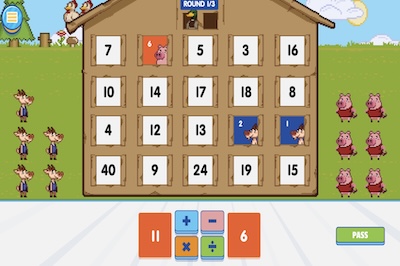
3. Pig Toss
4. Math Basketball
5. Inkster
6. Mummy Hunt 1
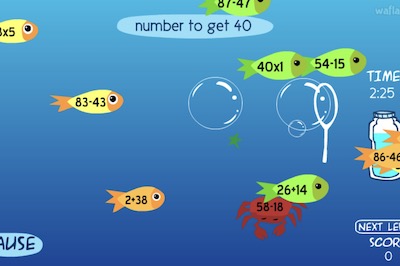
7. Night Swimmers
8. Math Soccer
9. Revealer
10. Ball Hogs
11. Puzzler
12. Brain Break
13. Mummy Hunt 2
14. Bumble Numbers 2
15. Answer a Question
16. Inkster 2
17. Moon Rocks 2
18. Revealer 2
19. Mummy Hunt 3
20. Ball Hogs 2
21. Puzzler 2
22. Brain Break 2
23. Night Swimmers 2
24. Moon Rocks 3
25. Mummy Hunt 4
This 25-stop progression is documented in surviving listings of the original Math Arcade. One small oddity is the fifteenth position: some surviving fan archives display it simply as an unidentified slot, while another historical listing names it “Answer a Question.”
Start With Bumble Numbers
Bumble Numbers was the first challenge players encountered, and it was a great introduction to how Math Arcade worked. You controlled a little bee and moved around the screen collecting floating numbers. The numbers then had to be matched with the correct math problem. Even this first activity showed what made the arcade enjoyable: the mathematics was important, but there was also movement and a simple game objective to think about.
After successfully completing a game, the player advanced farther along the arcade board. Seeing another space open gave each small math challenge a purpose. It was not simply about getting a score in Bumble Numbers or Math Basketball; you were trying to see what activity was waiting farther along the path.
Sports, Space, Mummies, and More
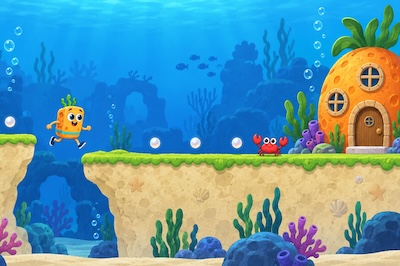
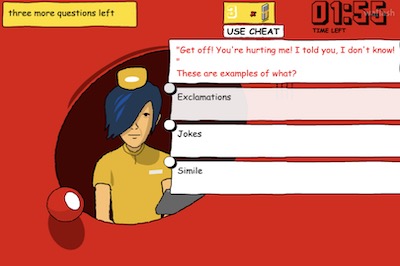
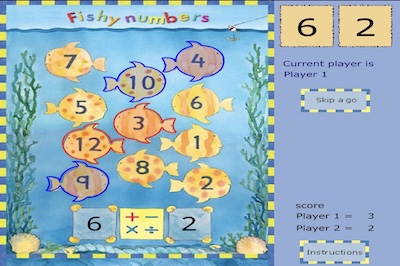
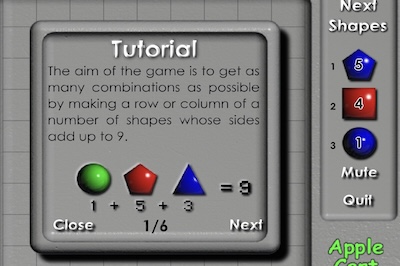
The variety of themes helped keep Math Arcade from becoming repetitive. Math Basketball and Math Soccer wrapped problems inside familiar sports, while Moon Rocks gave the experience a space-themed change of scenery. Mummy Hunt offered something completely different, and games such as Inkster, Revealer, Ball Hogs, and Night Swimmers each had their own visual style and gameplay idea.
Several activities returned later as sequels. Instead of abandoning a familiar idea completely, the arcade brought back games such as Bumble Numbers, Moon Rocks, Mummy Hunt, Inkster, Revealer, Puzzler, Brain Break, and Night Swimmers in later stages. By then, the player already understood the basic style of those games, making it easier to concentrate on the new or more difficult math problems.
Passwords Saved Your Progress
One particularly memorable feature was the password system. Math Arcade came from a time when browser games could not always rely on modern accounts or cloud saves. As players progressed, the arcade provided passwords that could be entered when returning later. The password placed the player back at the appropriate point on the board instead of forcing them to begin again from Bumble Numbers. Contemporary descriptions of the arcade specifically note this password-based progression system.
It was a simple solution, but it made Math Arcade feel much larger. Reaching a new game became genuine progress, and remembering or writing down your password meant you could continue the adventure another day.
Math Practice That Actually Felt Like an Arcade
What made Funbrain Math Arcade memorable was the way all of these small games were connected. Individually, many of the challenges were fairly simple, but placing them on a larger board transformed them into a journey. There was always a reason to finish the current activity because another game was waiting just ahead.
The changing themes also meant children were not staring at the same type of math exercise for an entire session. One moment could involve numbers and a bee, while the next might involve basketball, soccer, a mummy, or an unusual puzzle. Difficulty could be adapted to the player's grade level, allowing the same arcade structure to work for children with different levels of math experience.
Why Funbrain Math Arcade Is Still Remembered
Math Arcade is a good example of how older educational browser games could make simple ideas surprisingly memorable. It did not need an enormous 3D world or complicated controls. A colorful board, 25 different stops, playful characters, passwords, and a steady stream of short challenges were enough to make completing math problems feel rewarding.
For players who used Funbrain at school or at home, names such as Bumble Numbers, Moon Rocks, Math Basketball, Mummy Hunt, and Ball Hogs can bring back immediate memories. The real charm of Math Arcade came from wondering what was waiting on the next space and knowing that solving a few more math problems would get you there.